Designing for progress when the outcome is uncertain.
A little emotional support for the part of your career where nobody replies.
Overview
Slope is a job search companion designed for a process where effort rarely guarantees an outcome. Instead of pushing people to apply more, maintain streaks, or hit weekly goals, Slope helps job seekers focus on worthwhile opportunities, recognize each application as progress, and keep moving through the uncertainty of silence and rejection.
My Roles:
Product Design
UX Strategy
Interaction Design
Visual Design
Deliverables:
Product Strategy
End-to-end User Flows
High-fidelity Prototype
Product Specification
Platform:
Responsive Web
Desktop & Mobile
Status:
Prototype Complete
Implementation in Progress
The Challenge
Job searching has a broken feedback loop. Job seekers can control the effort they put in, including finding roles, tailoring applications, and applying. But they have little control over what comes back. A thoughtful application can lead to an interview, a rejection, or simply silence.
How might we help job seekers recognize progress when the outcome they care about most is outside their control?
How might we support persistence without turning applications, streaks, or goals into another source of pressure?
Top-Level Questions
If job seekers cannot control whether an application leads to a response, an interview, or an offer, then traditional measures of success only tell part of the story. I focused on what the product could recognize and support while the outcome was still uncertain.
What should progress mean when the outcome is outside the user's control?
How can a product acknowledge effort without turning persistence into another performance metric?
How should the experience respond when there is no outcome at all, only silence?
Approach
Instead of measuring progress by outcomes such as interviews or offers, I focused Slope on what job seekers can actually control: taking the next meaningful action.
Redefining what progress means
Progress is effort, not outcome

An application is progress even when the result is unknown.
Silence is uncertainty, not failure

No response should automatically be treated as a negative outcome.
No streaks, daily goals, or penalties for stepping away.
Persistence should not become a quota

Acknowledge the difficulty without exaggerated celebration or forced positivity.
Support should feel human, not motivational

The metaphor of a stone moving across uncertain terrain became a way to express this idea: the product does not promise the summit. It recognizes the distance already traveled.
Insights Analysis
The gap between effort and outcome is uncertainty.
WHAT JOB SEEKERS CAN CONTROL
Find a role → Prepare → Apply
WHAT THEY CAN'T CONTROL
Response → Interview → Offer
Activity ≠ Progress
More applications can create more activity without creating meaningful progress.Silence ≠ Rejection
No response is ambiguous, even when it feels like a negative outcome.More Choice ≠ Momentum
More jobs to browse do not necessarily make the next decision easier.
Opportunities
Slope was designed around a continuous loop that supports the job search before, during, and after each application. The goal is not to push users toward more activity, but to help them take the next meaningful step and continue when they are ready.
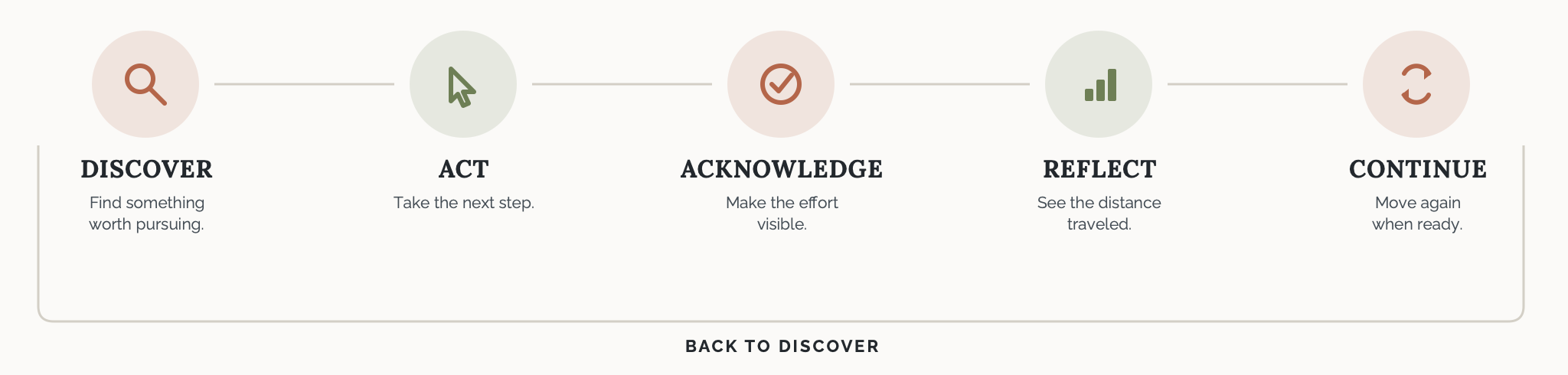
TURNING UNCERTAINTY INTO FORWARD MOTION
Endless Browsing → Prioritize What Matters
Create a Clear Starting Point
Surface a focused shortlist of roles worth considering first, while keeping more opportunities available when users want to continue exploring.
Product response: Today’s Jobs
No Response → Reframe the Silence
Make Uncertainty Legible
Acknowledge prolonged silence without automatically treating it as rejection or a negative outcome.
Product response: Applied
Activity Meaning → Recognize the Action
Make Effort Count
Treat each confirmed application as progress, regardless of whether a response follows.
Product response: Application Confirmation
Progress → Make Persistence Visible
Show Distance, Not Performance
Turn accumulated effort into a journey with milestones and moments to look back on, without streaks, quotas, or scores.
Product response: Journey
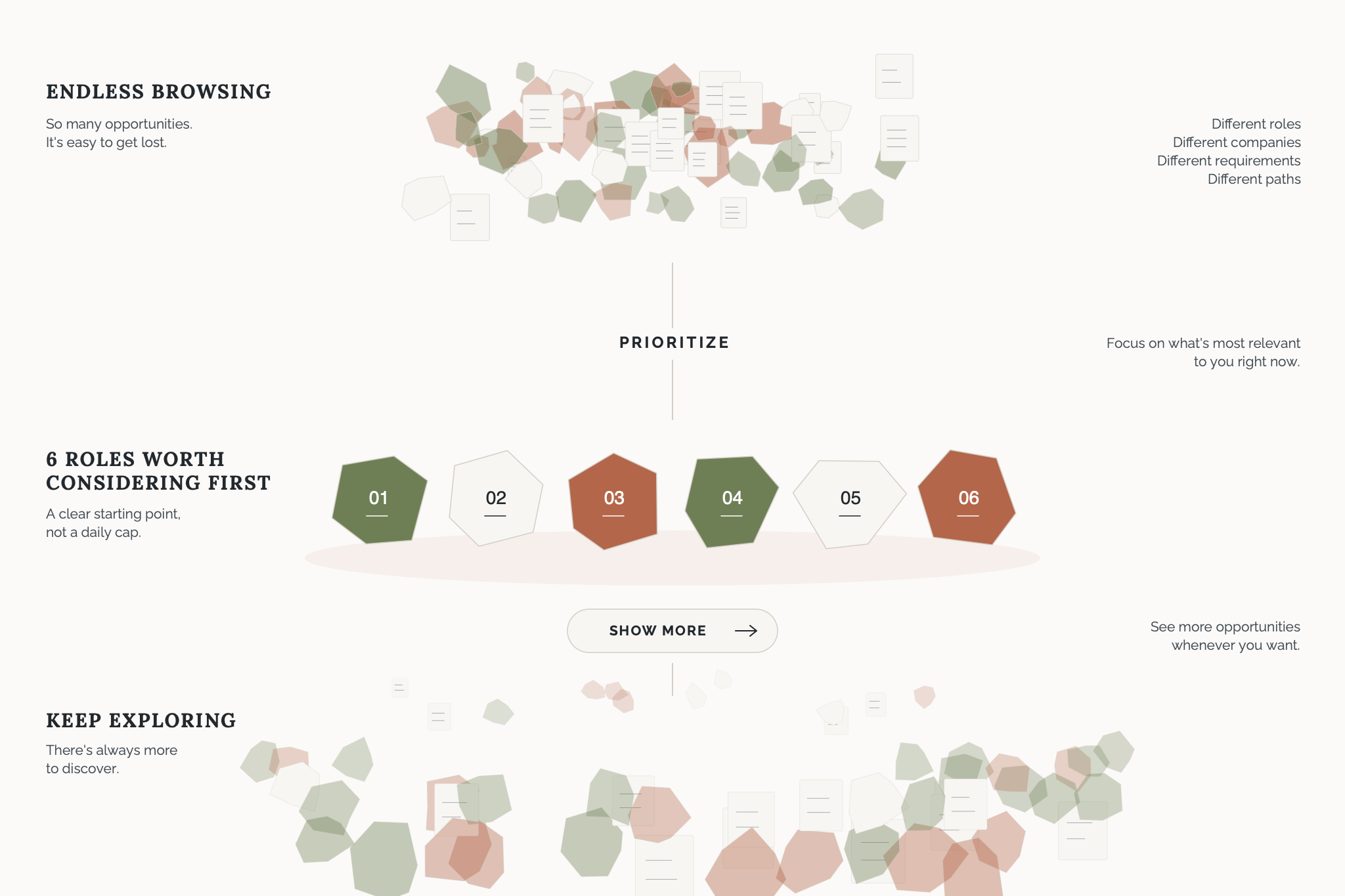
Endless Browsing → Prioritize What Matters
Design Thinking
01
TODAY: Start With What Matters
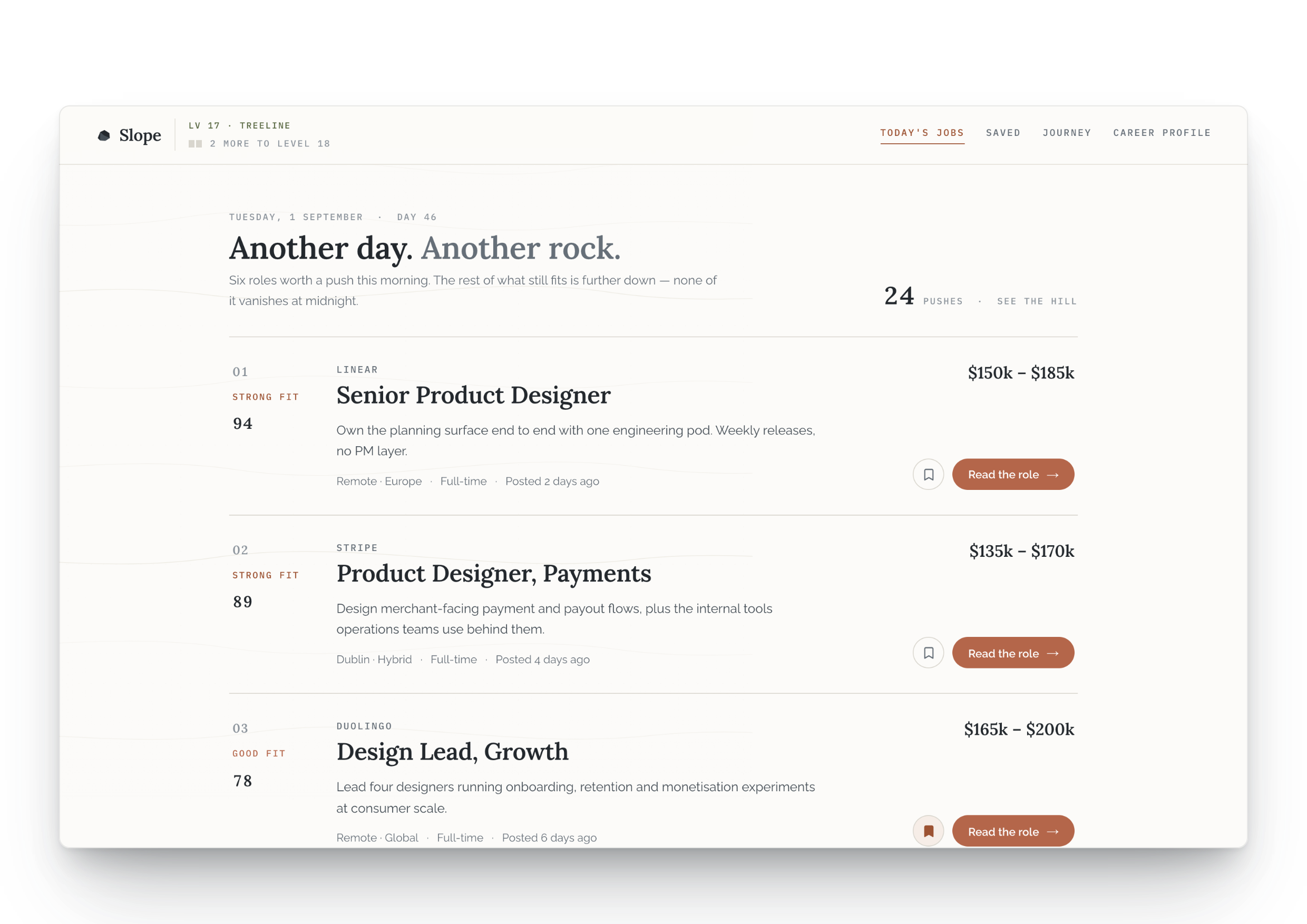
Job searching can easily become endless browsing. Slope creates a clear starting point by surfacing six roles worth considering first, while keeping more opportunities available when users want to continue exploring.
Prioritized, Not Limited
The first six roles create a clear starting point, not a daily cap. Users can continue exploring whenever they want to see more.
Explain the Fit
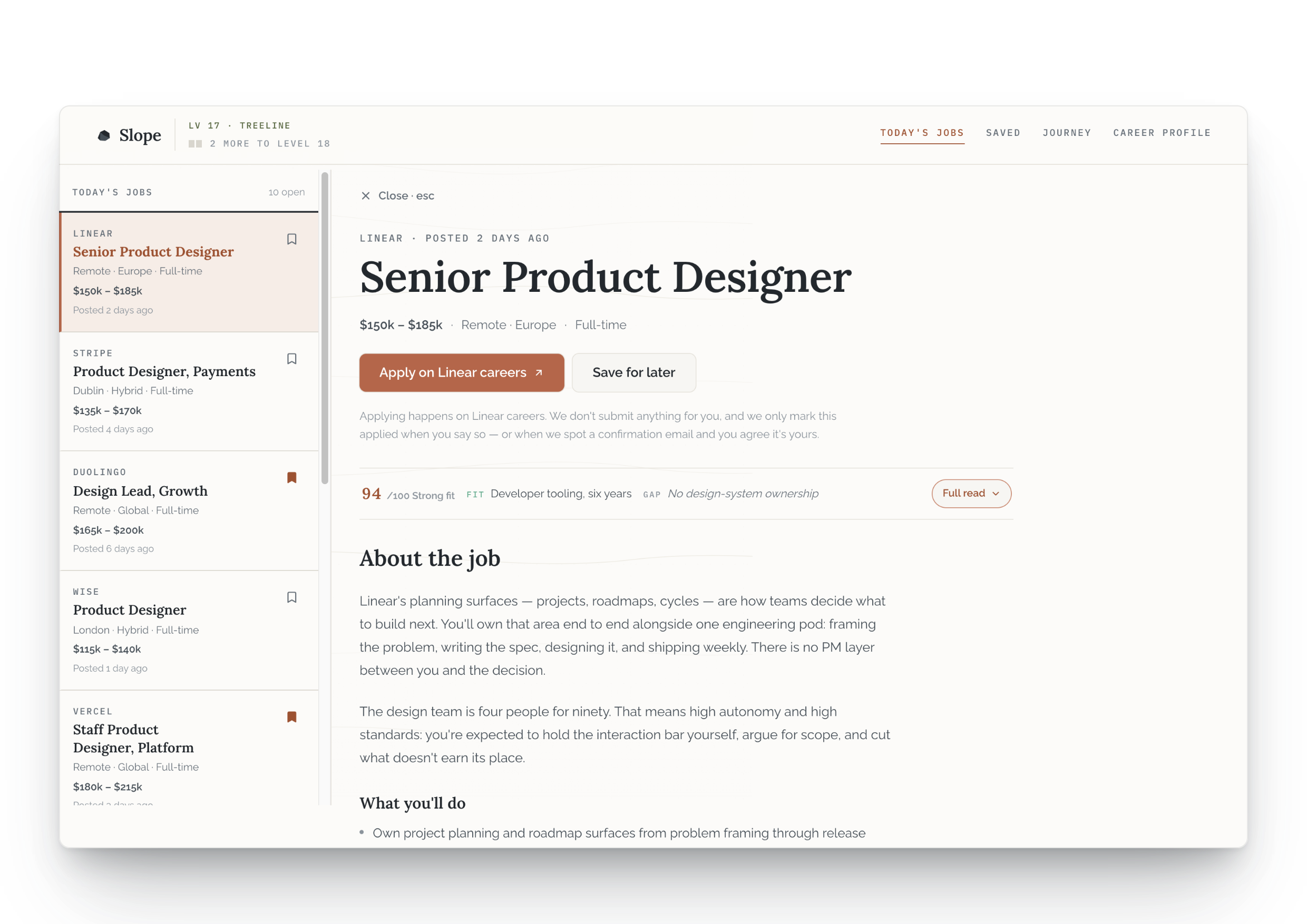
Instead of reducing a role to a match score, Slope shows why it may fit and where the gaps are, giving users context to make their own decision.
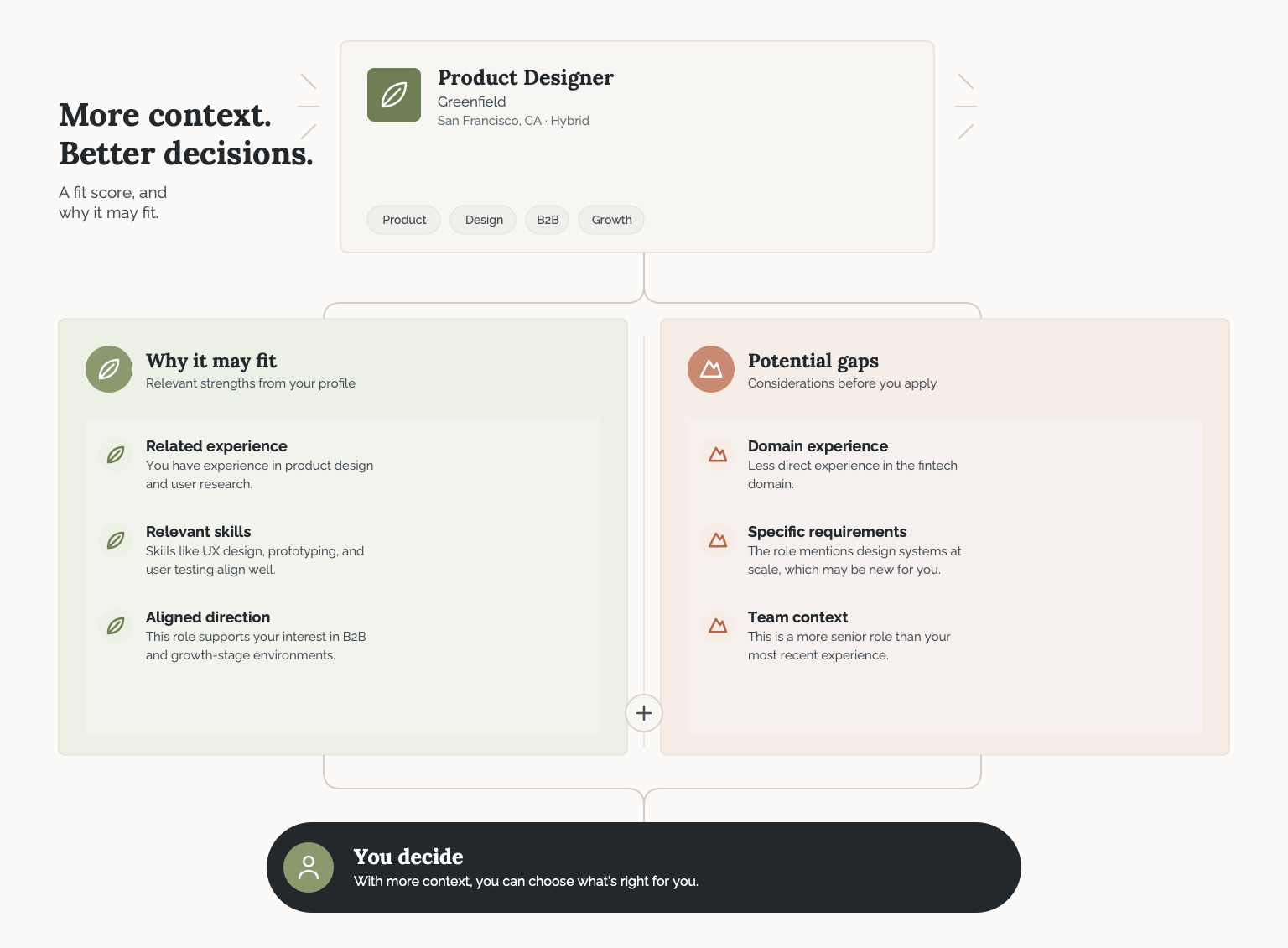
Keep the Decision Human
Slope helps users evaluate an opportunity without deciding for them. The recommendation provides context. The user retains the agency.
02
Recognize the Action
Applying is one of the few parts of the job search users can actually control. Slope recognizes the application itself as progress, without waiting for an interview, response, or offer.
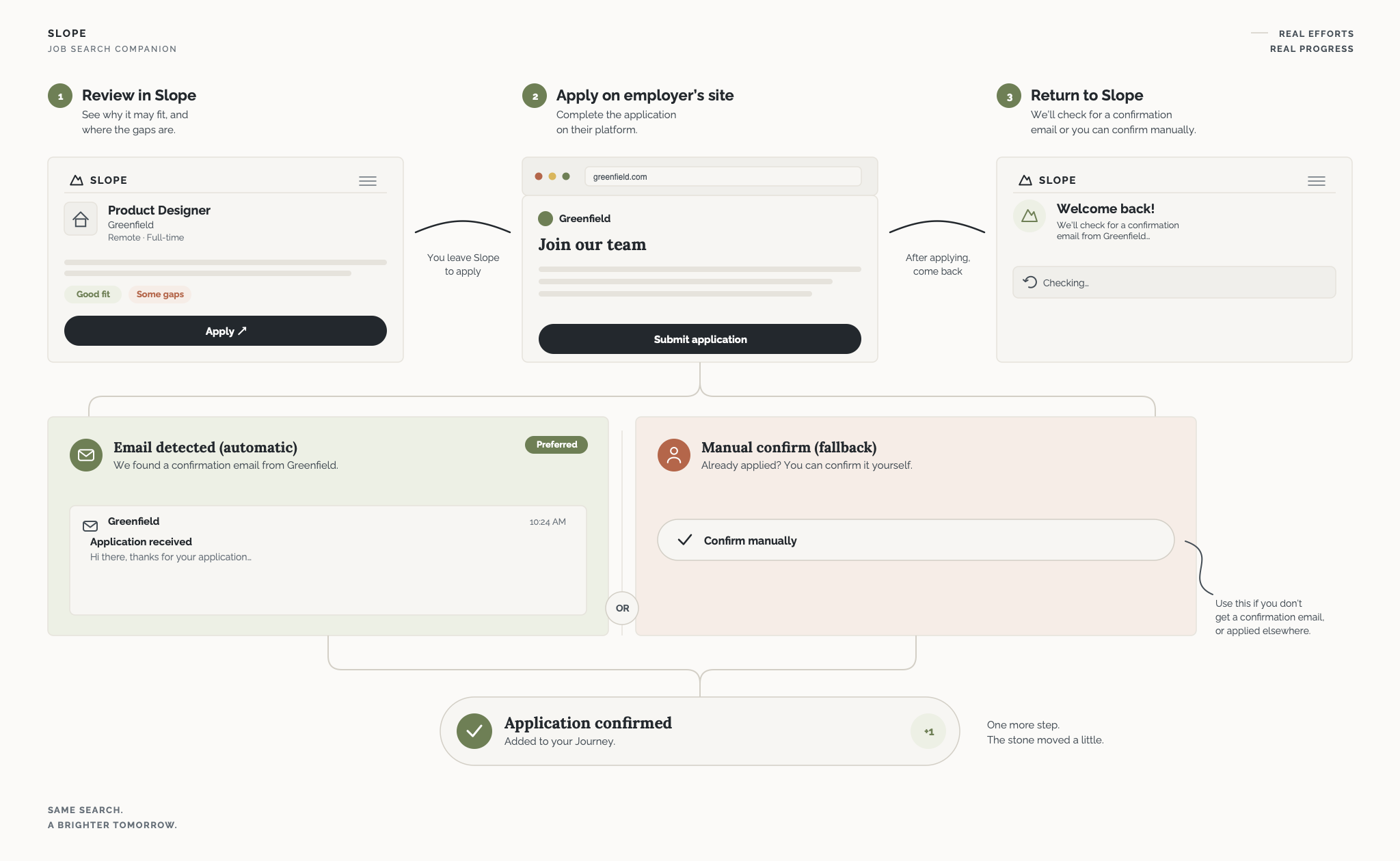
Apply Outside. Confirm Back in Slope.
Slope sends users to the employer’s platform to apply. When they return, the application can be confirmed through email detection or manually by the user, turning an external action into visible progress.
03
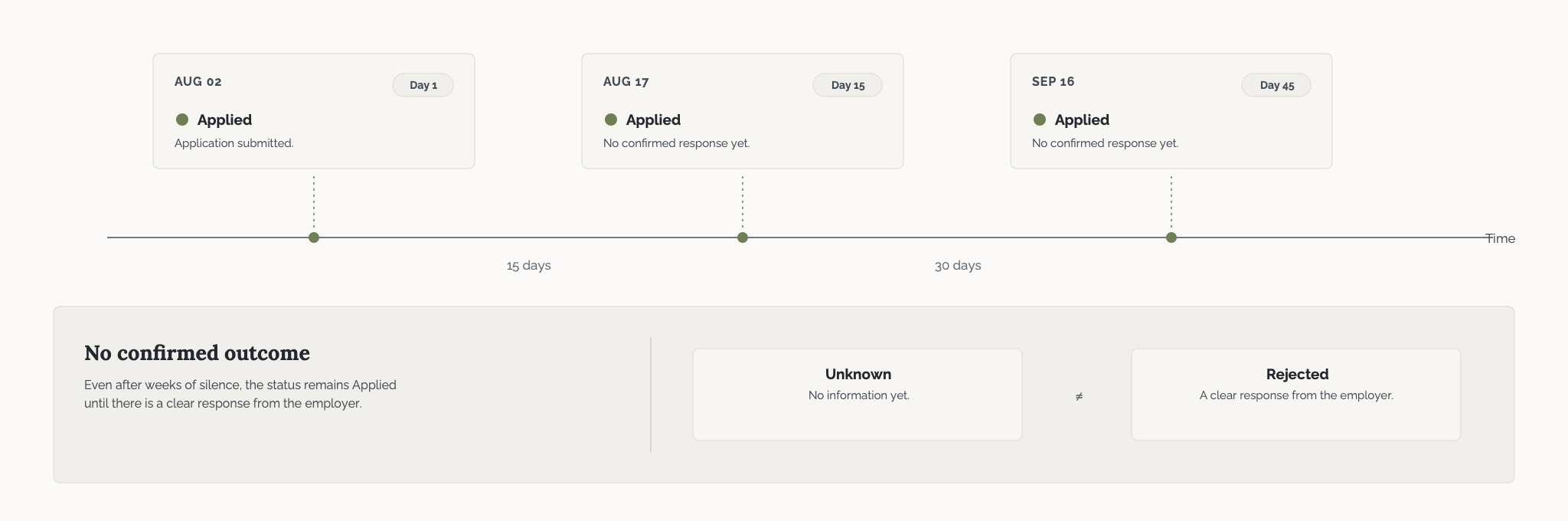
SILENCE: Make Uncertainty Legible
After an application is submitted, there may be no clear outcome for weeks or months. Instead of forcing that uncertainty into a negative status, Slope keeps the application as Applied while acknowledging the silence around it.
04
Show Distance, Not Performance
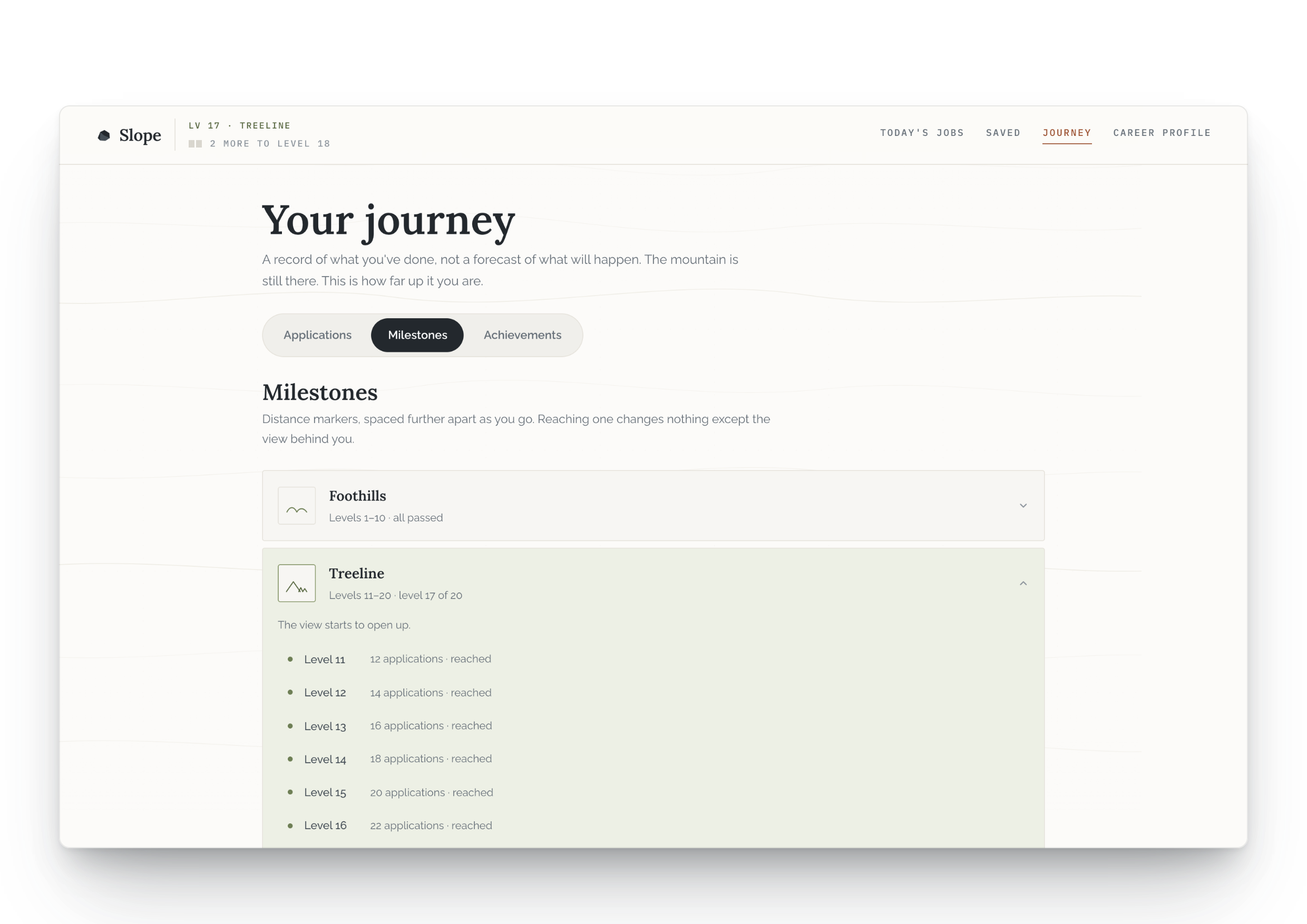
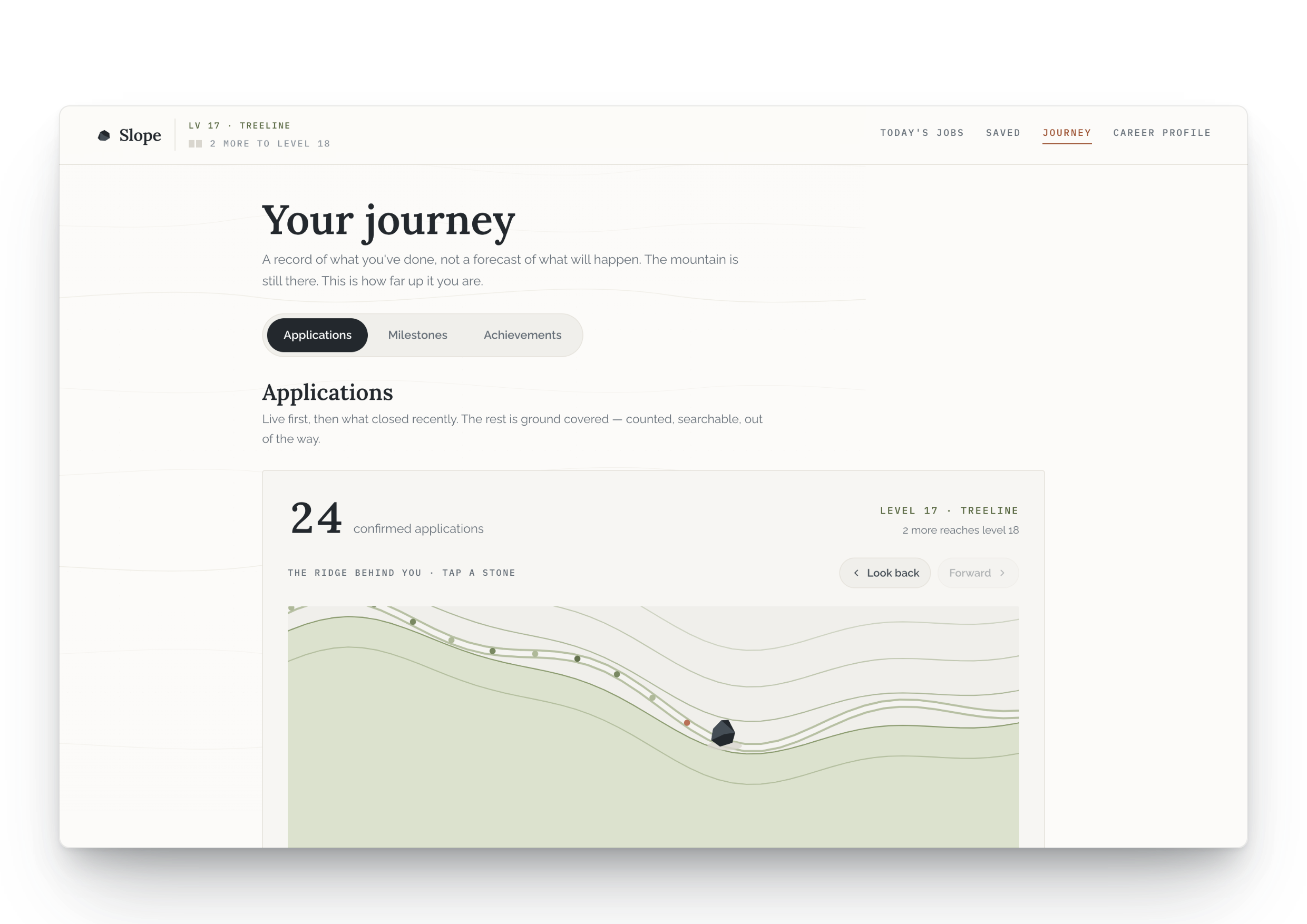
Over a long job search, individual applications can start to blur together. Journey turns accumulated effort into something users can look back on, making persistence visible without turning it into a score.
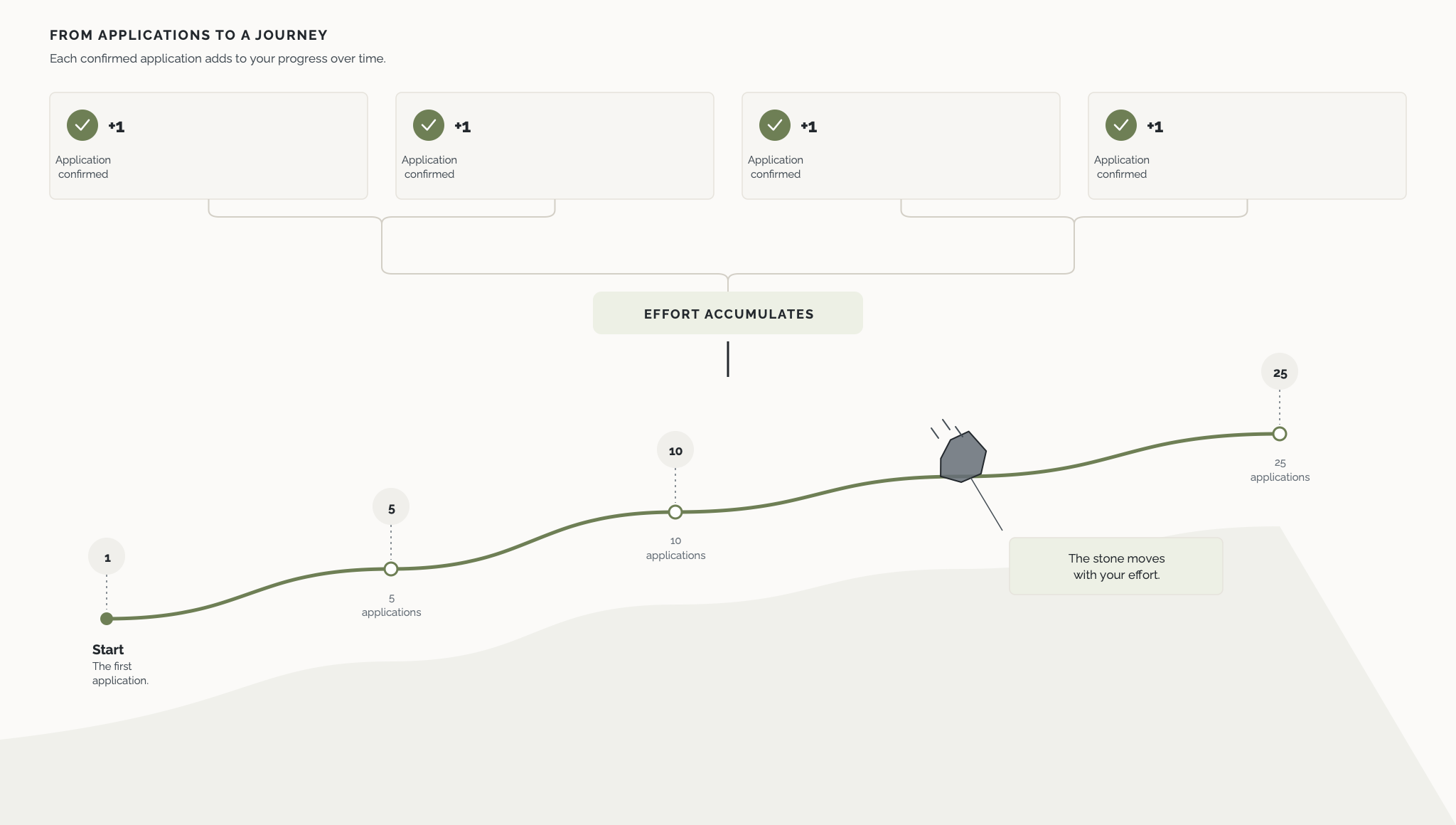
Make Progress Visible
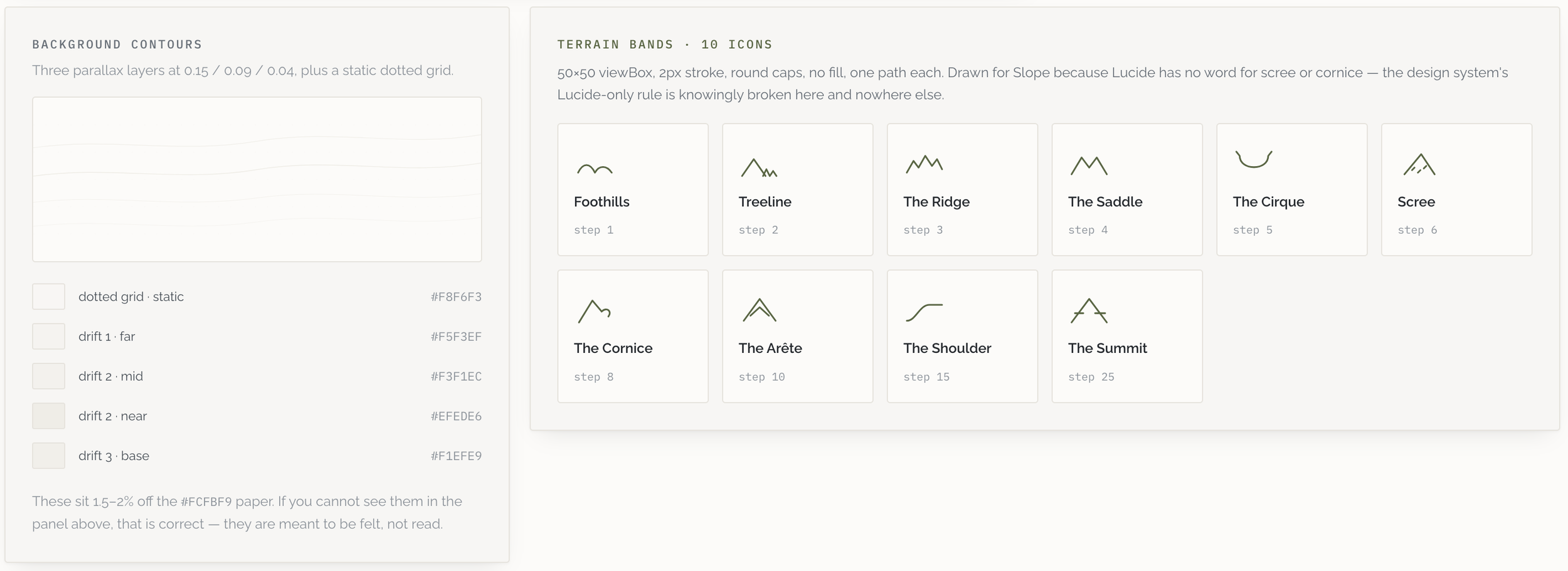
Journey translates accumulated applications into distance traveled, using a stone moving across uncertain terrain to make progress feel tangible.
The product does not promise the summit. It recognizes the distance already traveled.
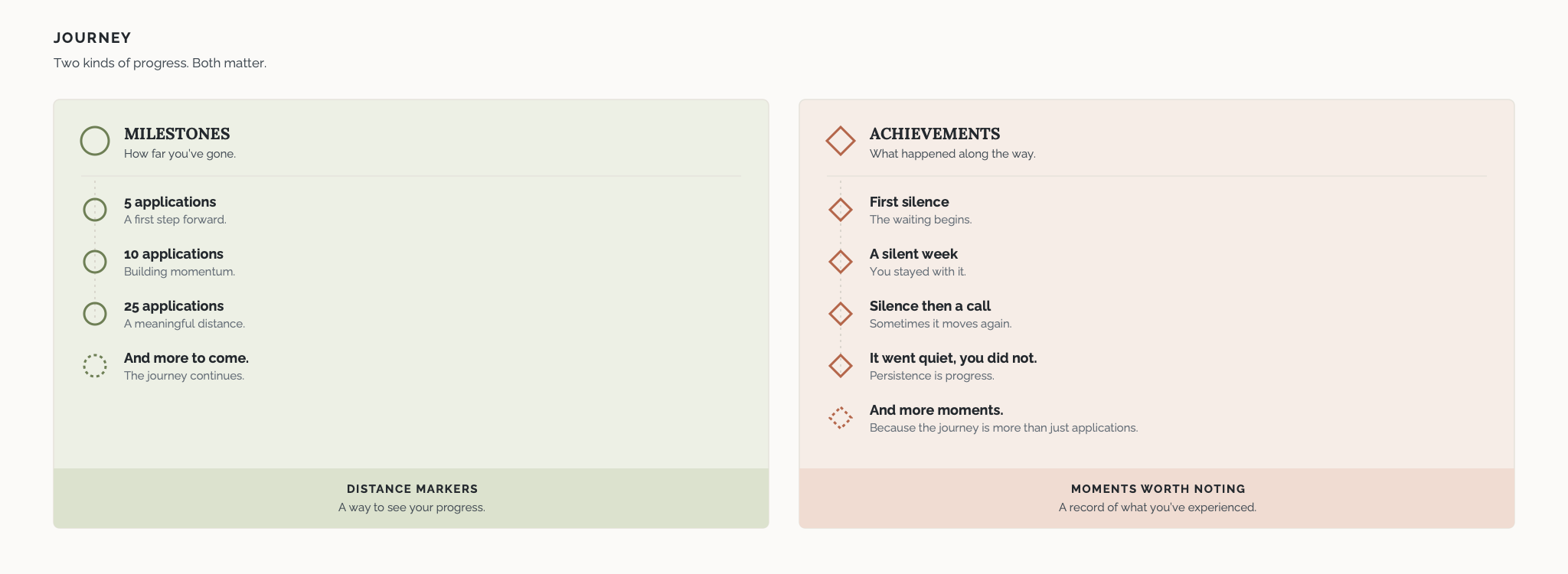
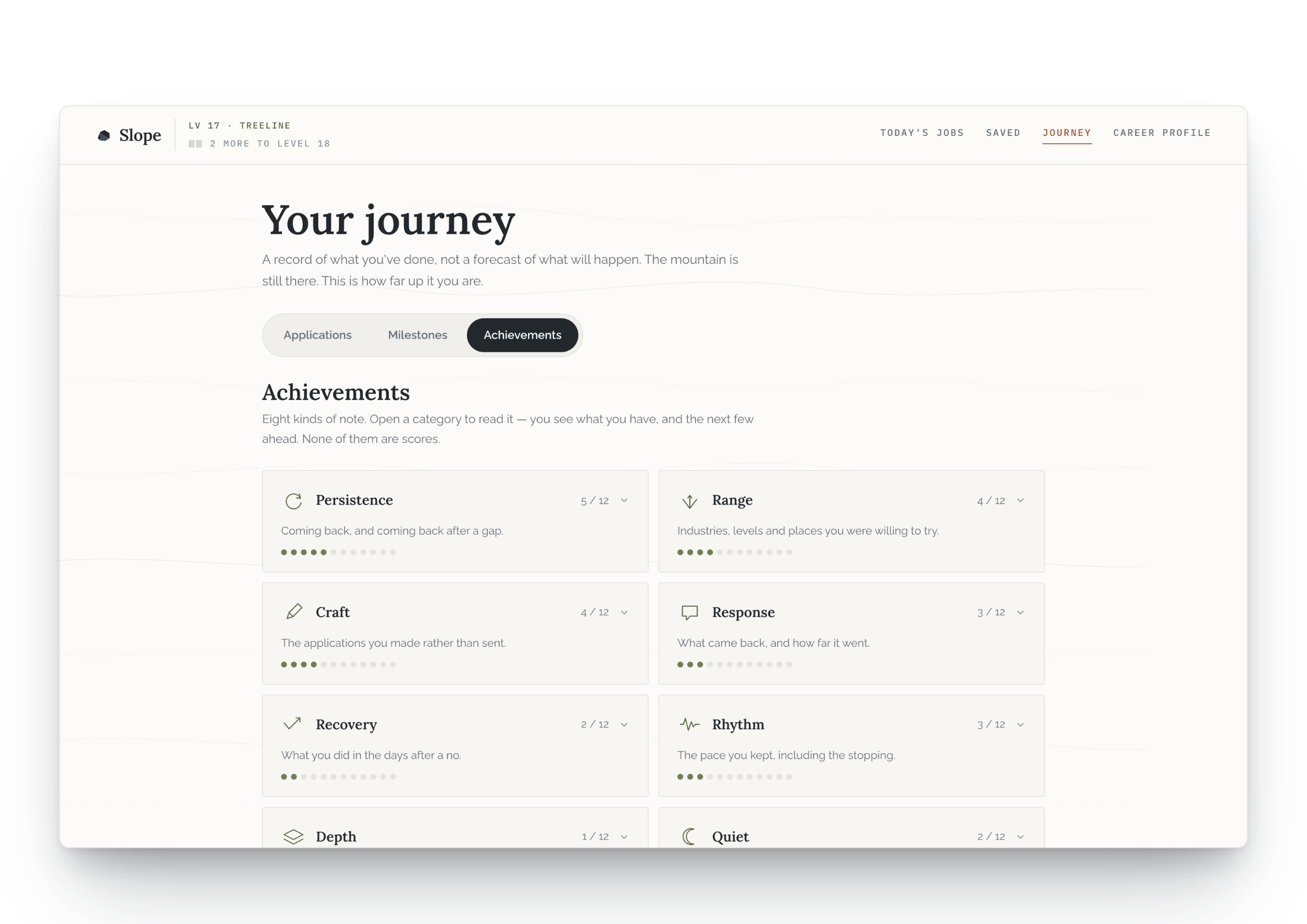
Distance Markers, Not Scores
Milestones and achievements give users moments to look back on without turning persistence into a competition.
Remember More Than Success
Journey does not only record positive outcomes. It also acknowledges the quieter parts of the search, including periods of silence and the persistence required to continue through them. What happened matters. Continuing matters too.
AI-ASSISTED DESIGN & BUILD PROCESS
I used AI across the project as a design and development workflow, moving from early exploration to product definition, prototyping, critique, and implementation. Each tool supported a different part of the process while the product decisions remained connected through a shared design direction.
Turning Exploration Into a Buildable System
Explore Before Converging
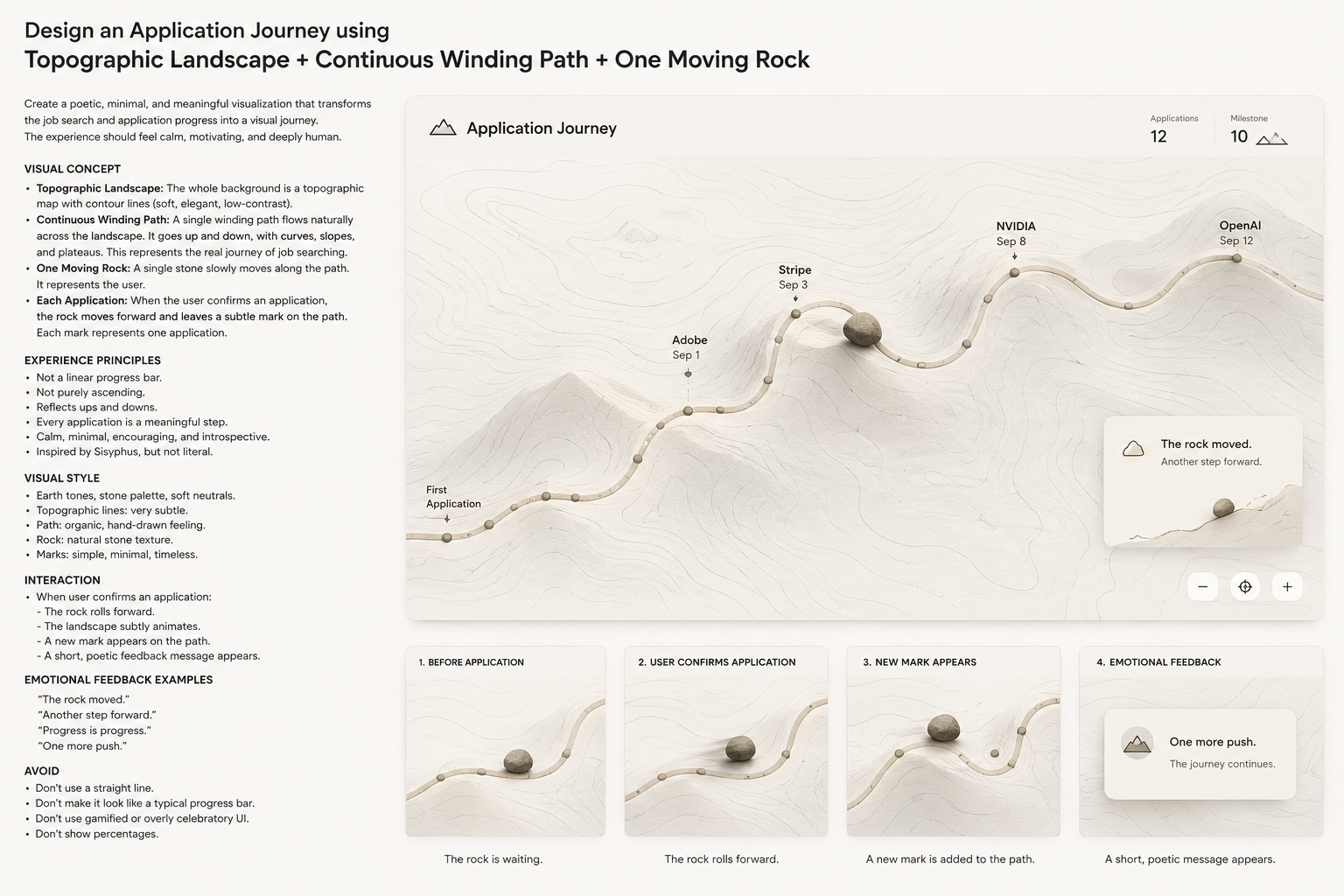
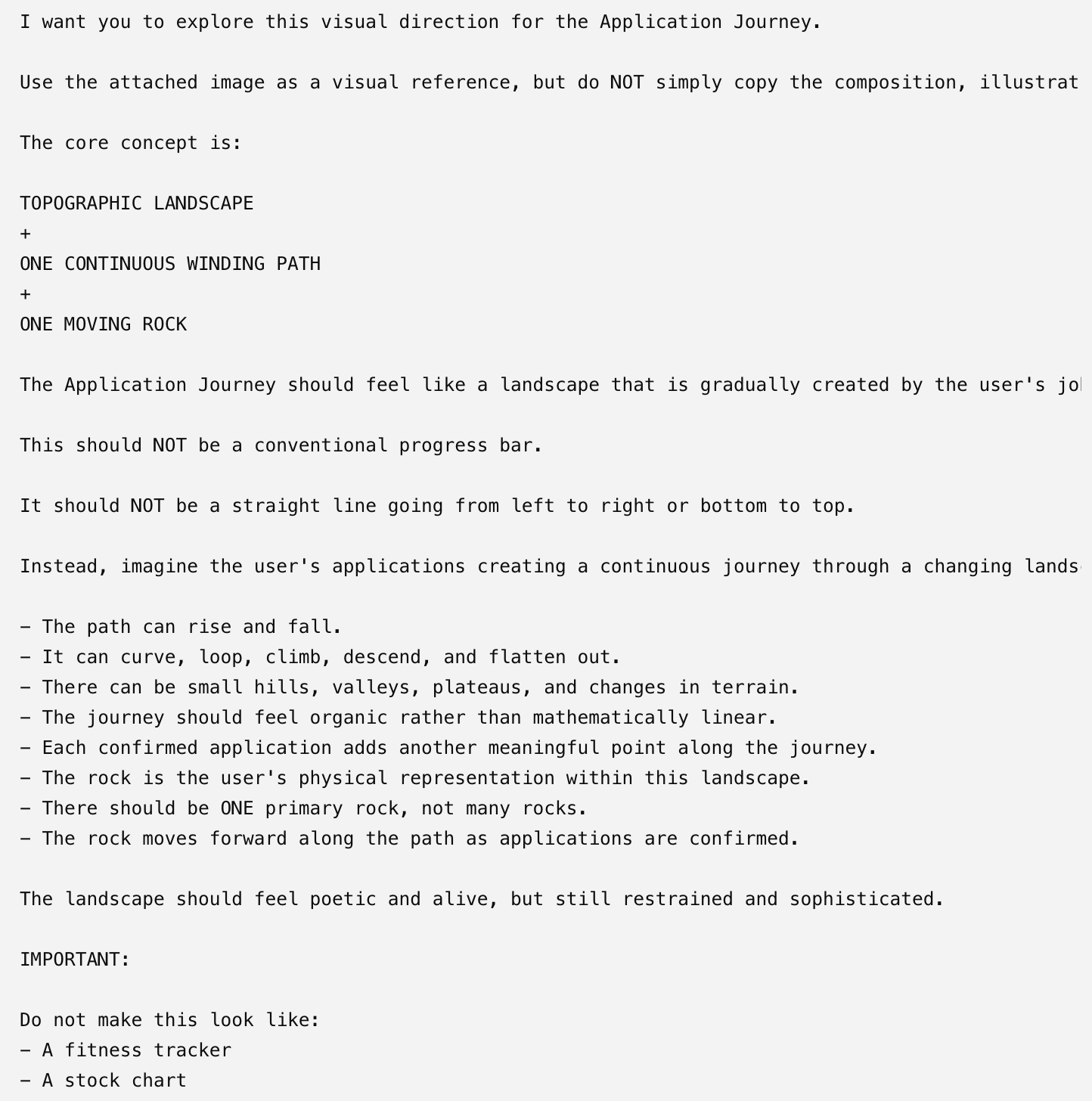
I used AI to move quickly from early product questions into tangible directions. Gemini supported initial brainstorming, while ChatGPT helped organize the product concept, define interaction logic, and turn emerging decisions into a clearer design specification.
The goal was to generate possibilities quickly, then decide what was worth keeping.

Prototype to Critique
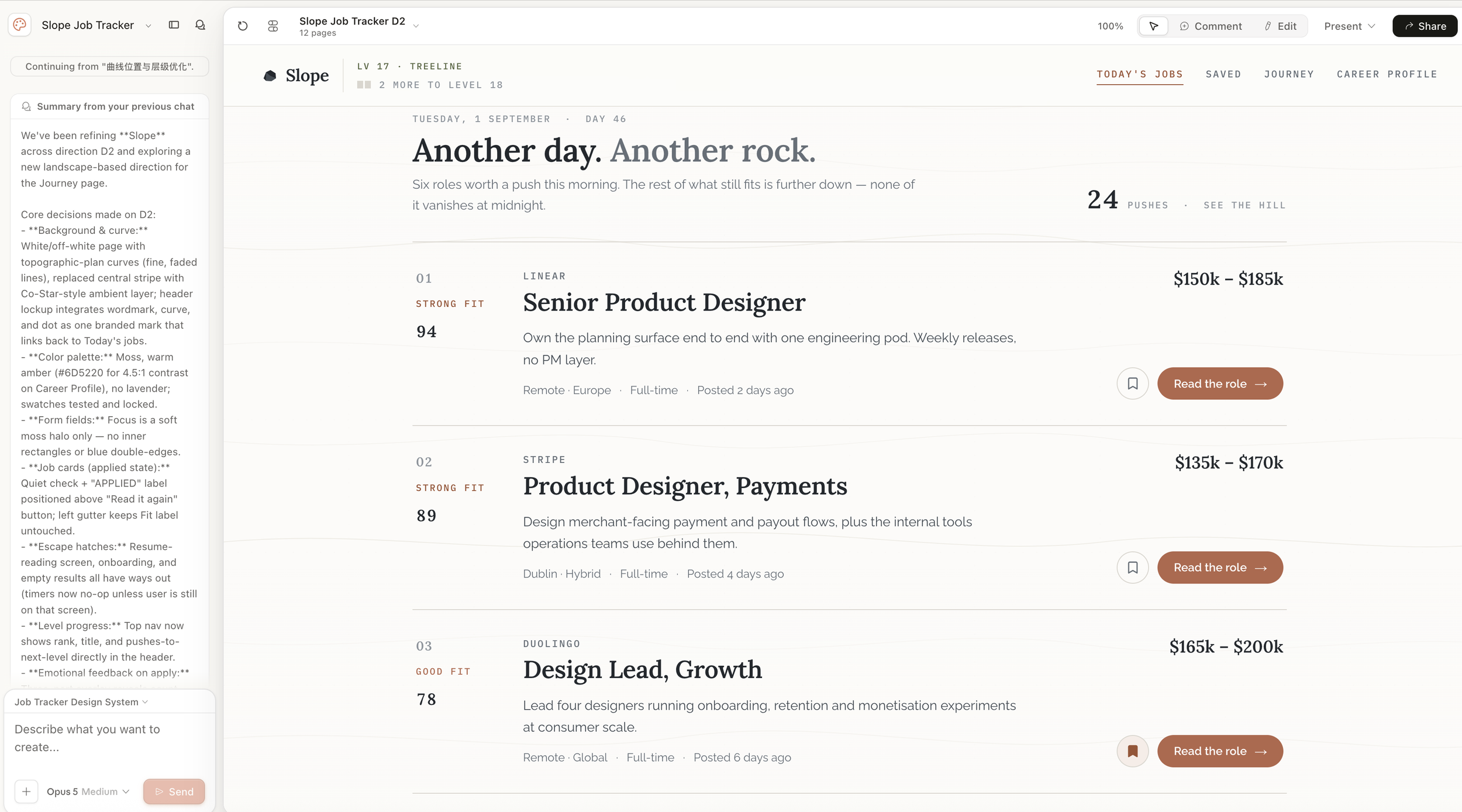
I used UI/UX Pro Max to establish an initial design-system direction, then moved into Claude Design to prototype the experience and explore the visual language of Slope.
As the prototype evolved, I used it as something to critique, not something to approve. Interaction patterns, visual hierarchy, product language, and the Journey metaphor were repeatedly evaluated and refined.
Make the Prototype Buildable
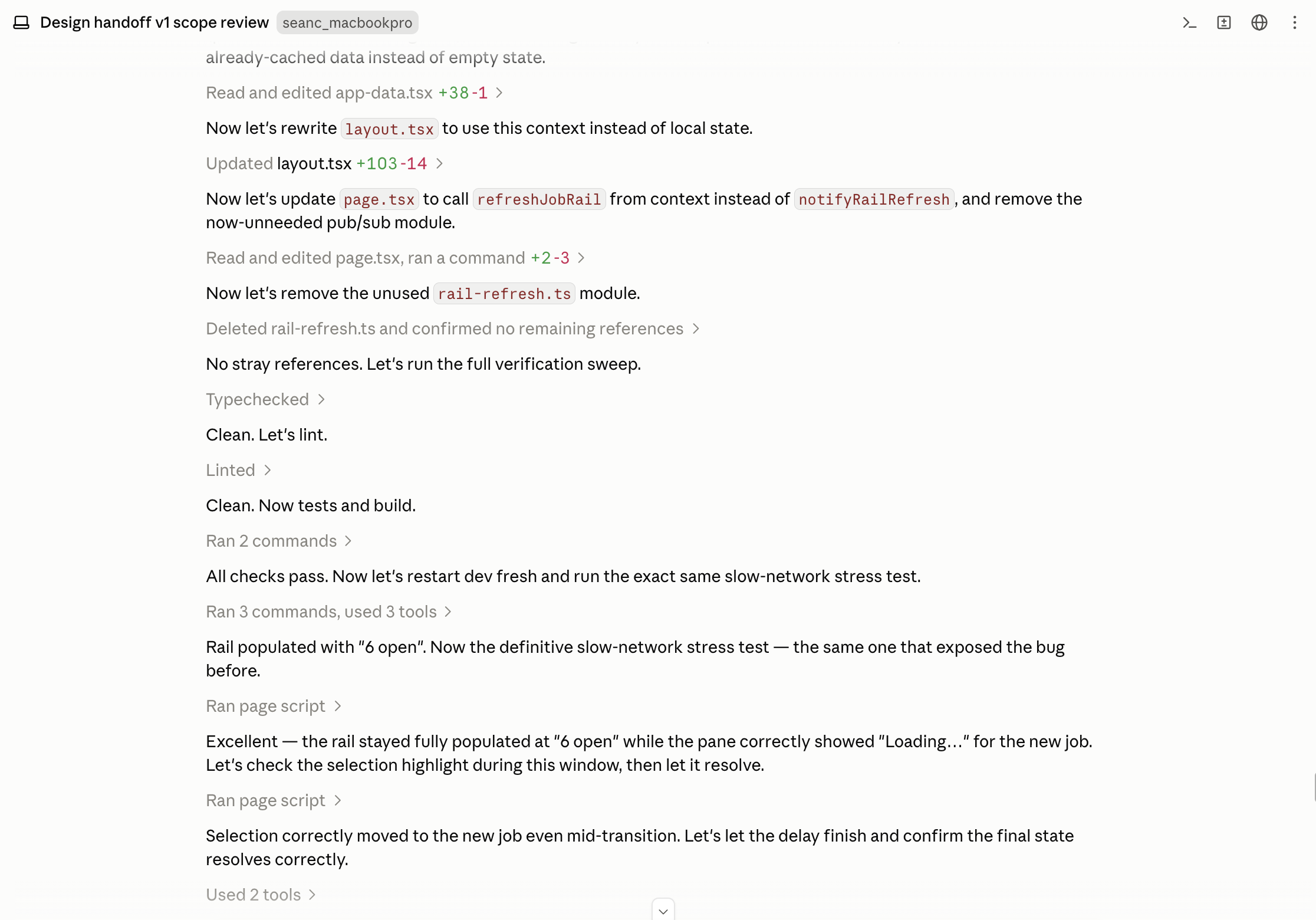
Once the core experience stabilized, I translated the prototype into a product specification covering flows, states, interaction behavior, data logic, and implementation priorities.
The specification became the bridge between Claude Design and Claude Code, where Slope is now being implemented as a responsive web product.
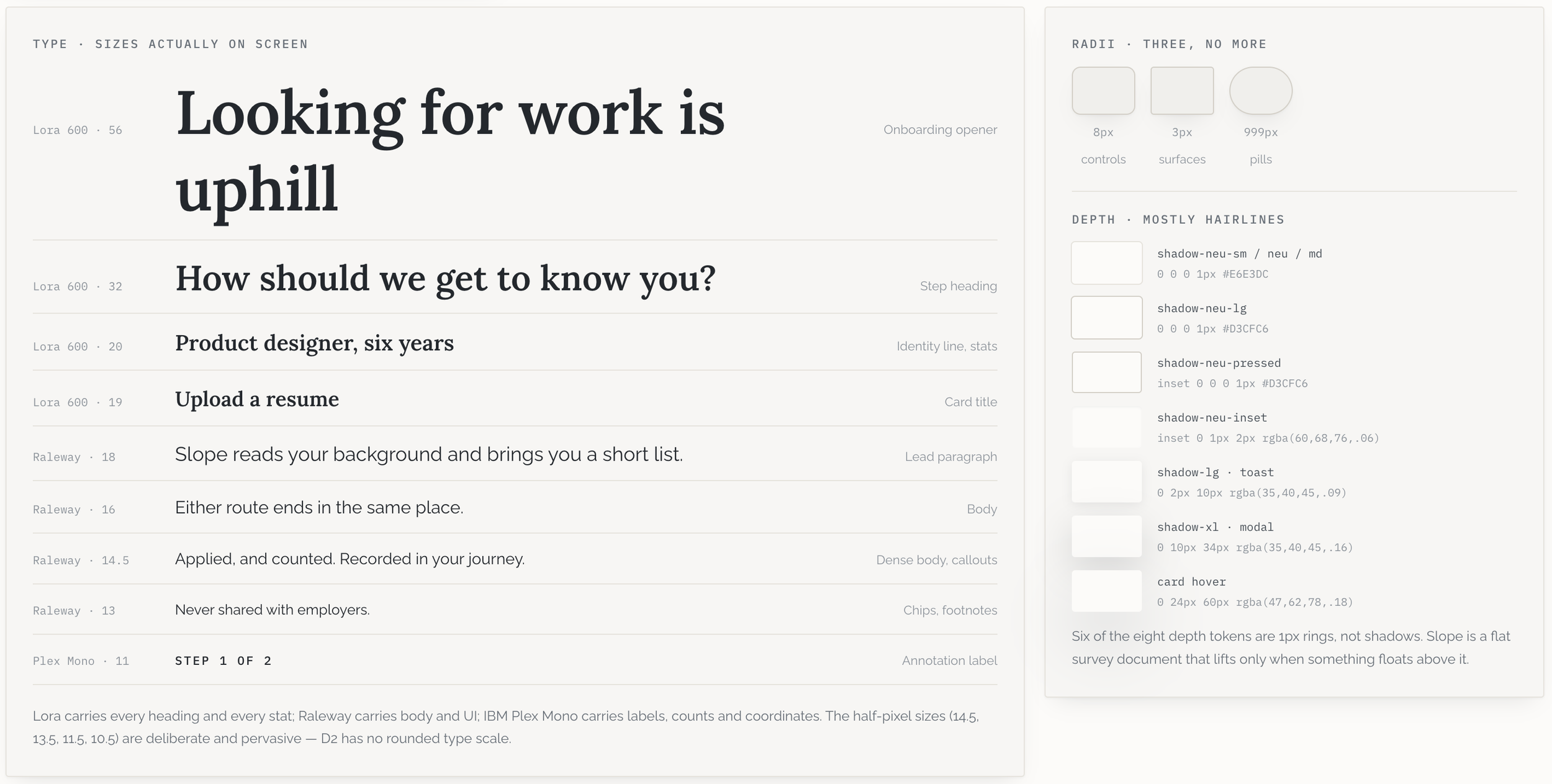
When implementation exposes a gap or deviates from the intended experience, I return to the design and specification rather than treating the prototype as a fixed handoff.
Hi-Fi Design
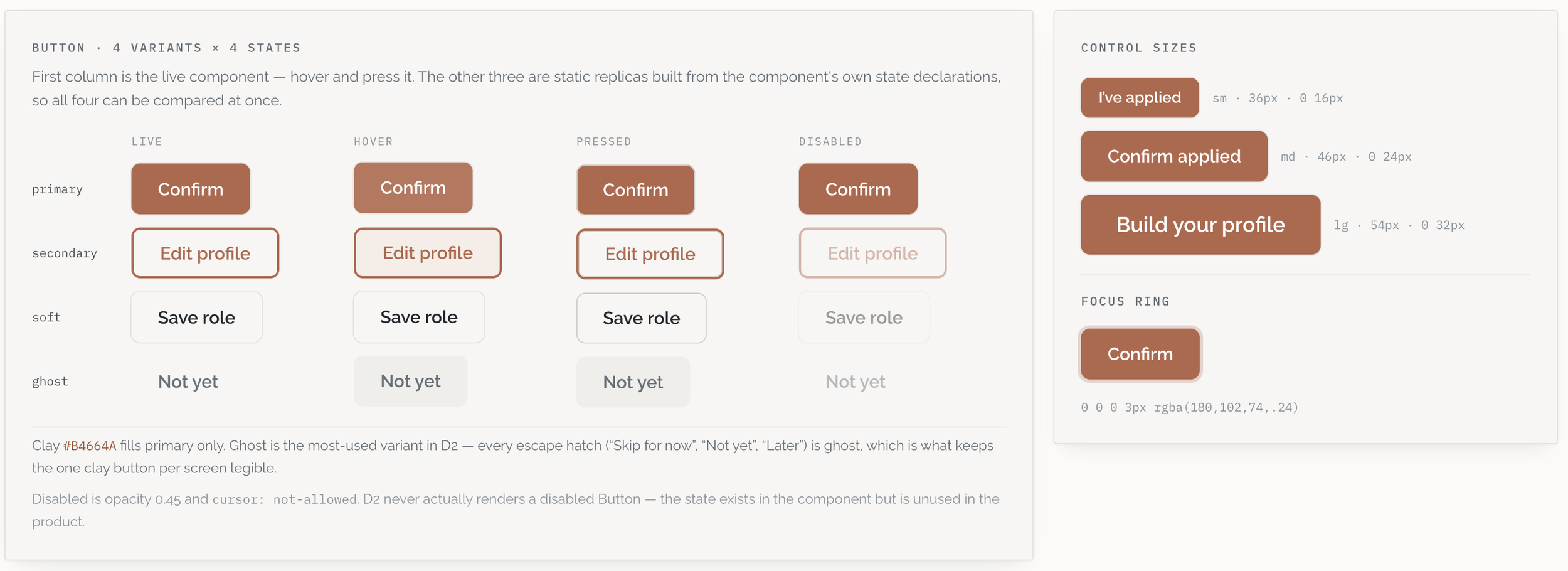
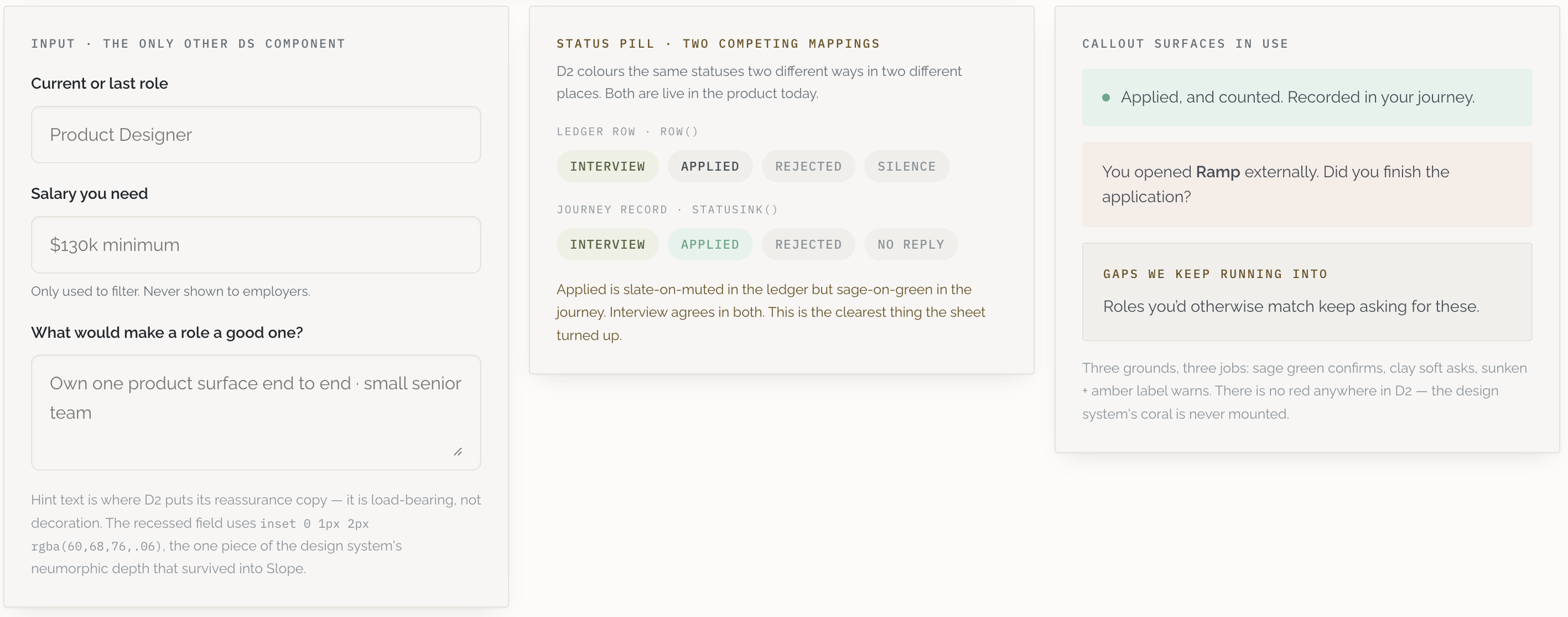
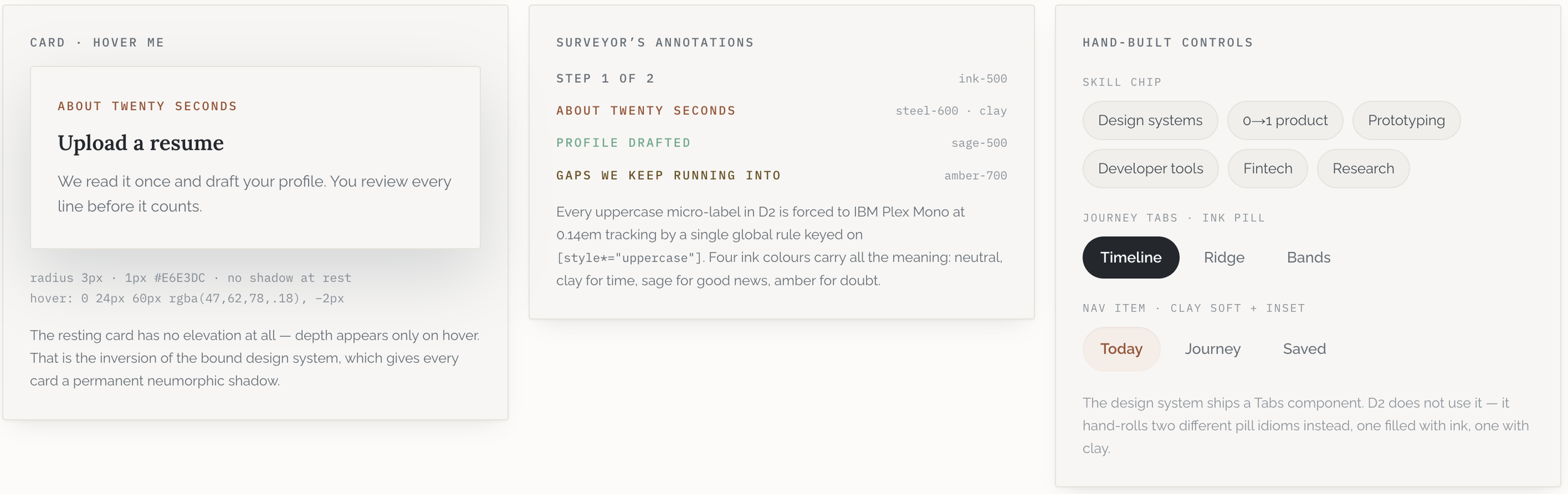
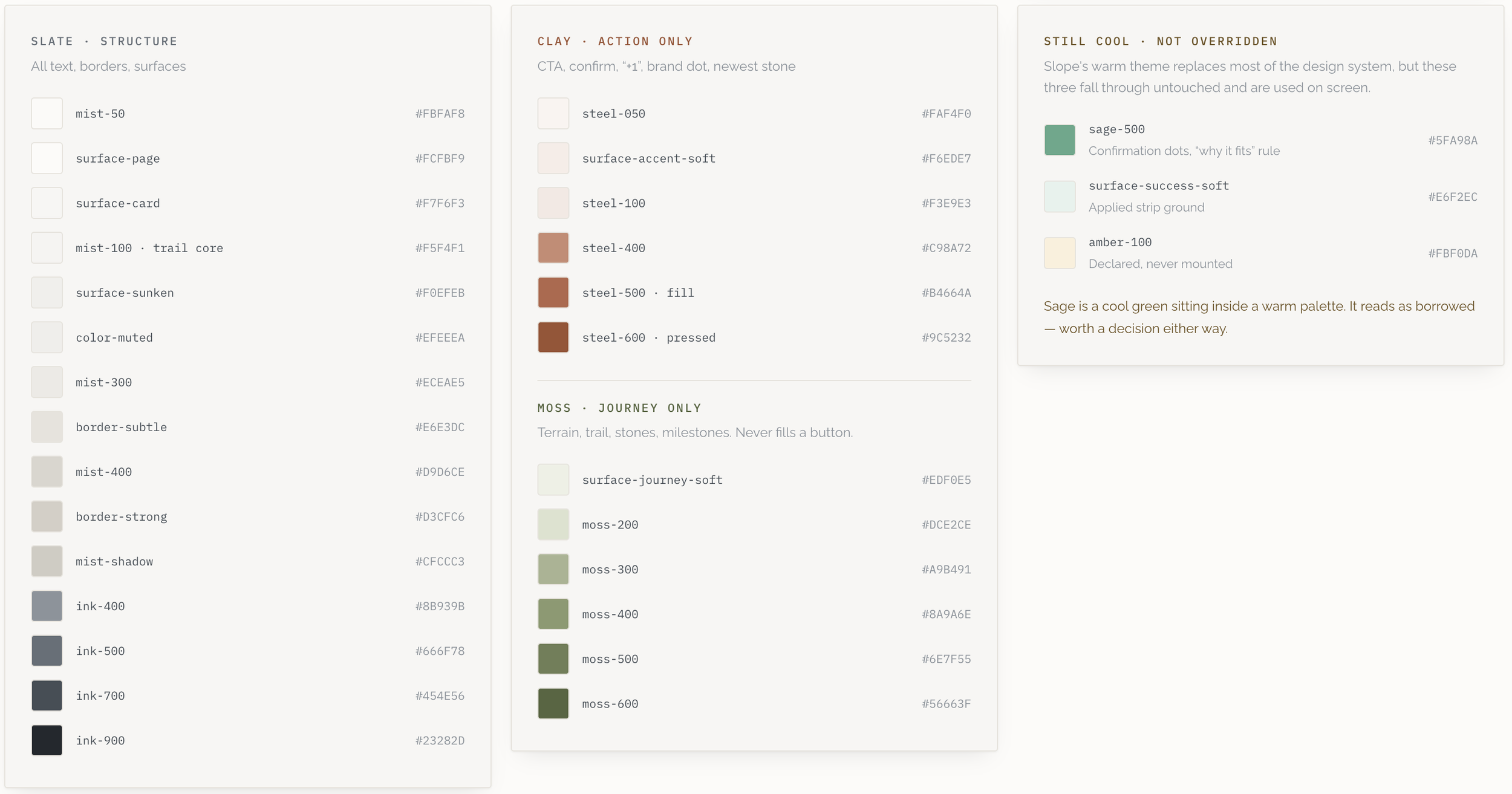
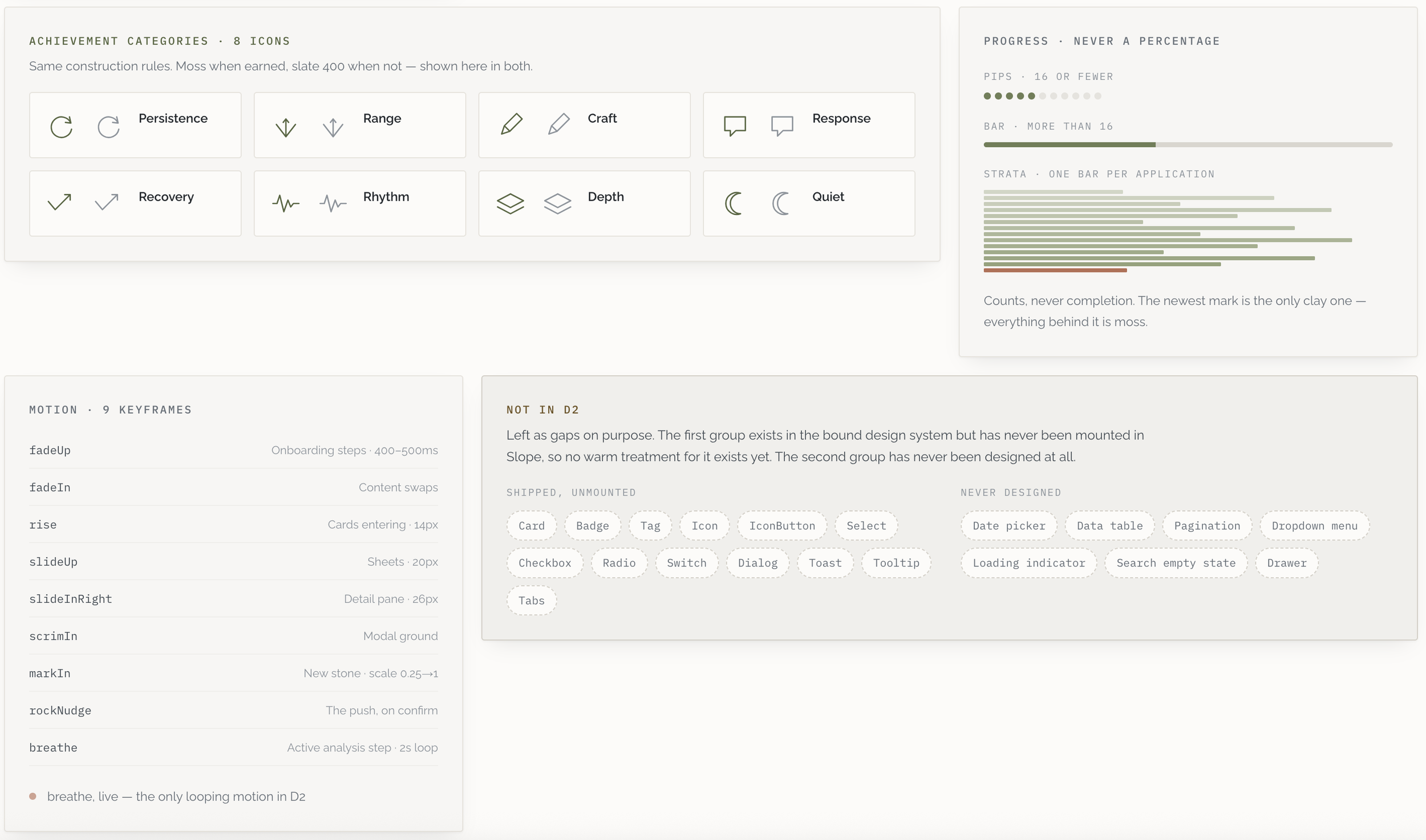
Design System